
How to Safely Treat and Remove Stubborn Driveway Oil Stains
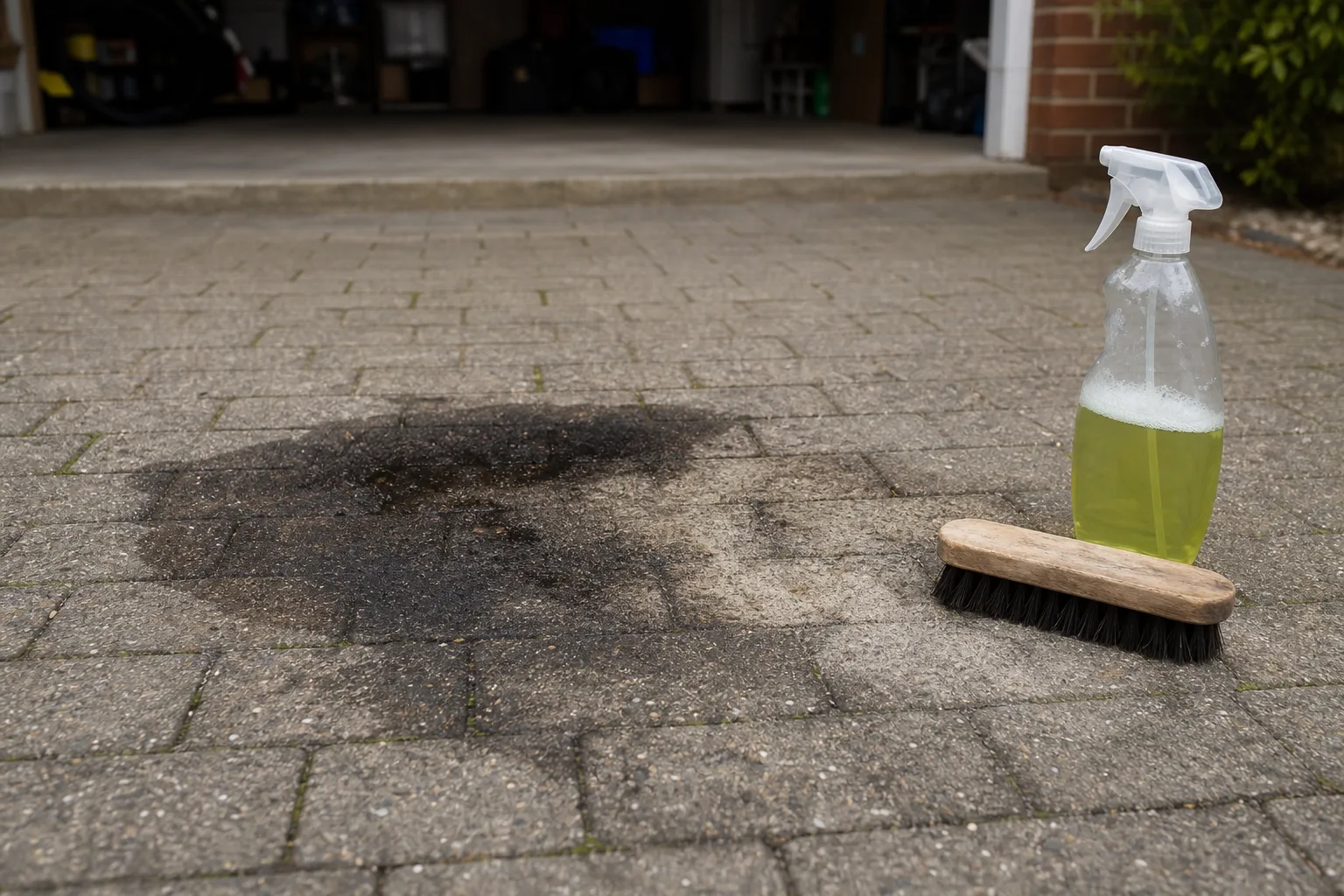
An oil stain is not on your driveway, it is in it
This is the single most useful thing to understand about oil marks, and it explains why almost every DIY attempt disappoints.
Concrete blocks, flags and tarmac are all porous. When engine oil, gearbox fluid or diesel drips onto paving it does not sit on the surface waiting to be wiped up. Capillary action draws it down into the pore structure of the material, and on a warm day it goes deeper and faster because the oil is thinner. Within a few hours a fresh drip has penetrated several millimetres.
Scrubbing the surface with washing-up liquid removes the small fraction of oil still on top. The rest is below, and over the following weeks it slowly wicks back up as the surface dries, which is why a stain you thought you had beaten reappears looking almost untouched.
The job is not cleaning a surface. It is drawing a contaminant back out of a porous material.
Why pressure washing alone makes things worse
A pressure washer aimed at an oil stain does three unhelpful things.
It drives some of the oil deeper into the paving. It spreads the rest outwards, turning a defined patch into a larger, vaguer grey shadow. And on tarmac it actively damages the surface, because bitumen is itself a petroleum product and is softened by the oil sitting in it. Blasting that softened area lifts the binder and loosens the chippings, leaving a permanently pitted patch.
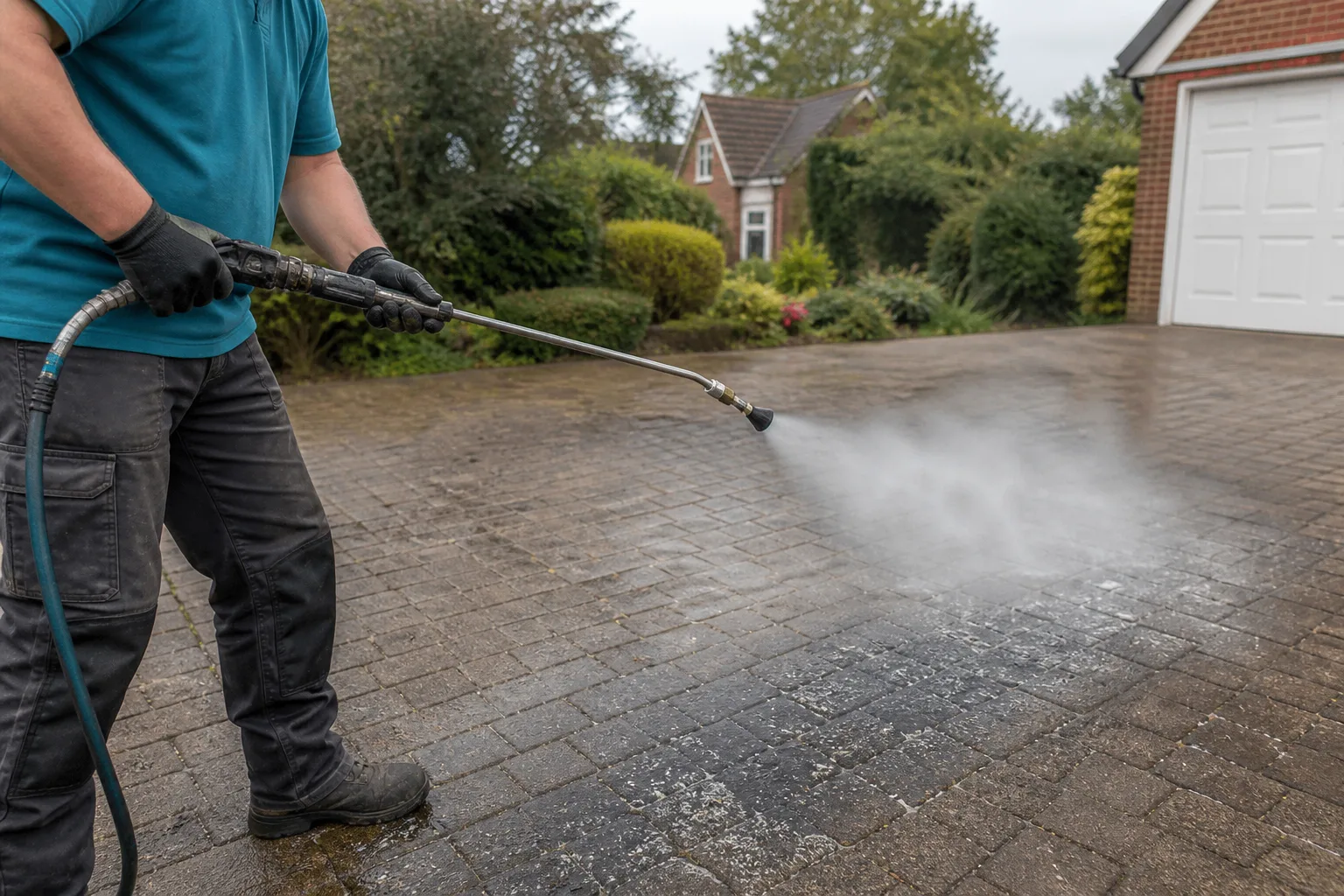
Hot water helps more than pressure does, because it lowers the viscosity of the oil and lets a degreaser work. But water alone, at any pressure or temperature, cannot lift oil out of stone. Oil and water do not mix; that is the whole problem.
What actually works: emulsification
Effective oil removal relies on surfactants. A surfactant molecule has one end that bonds to oil and another that bonds to water. Given enough contact time, surfactants surround the oil, break it into droplets and hold those droplets in suspension in water so the whole lot can be rinsed away. That process is emulsification, and it is the mechanism behind every degreaser worth using.
Modern citrus-based and plant-derived degreasers do this well. They are readily biodegradable, safe to use near planting and lawns when rinsed properly, and they will not bleach or etch the paving. What they need is dwell time: long enough to penetrate down to where the oil actually is and lift it back out. Ten minutes on a light stain, considerably longer on an old one, often with more than one application.
We favour these over harsh solvents for a specific reason. Strong solvents and neat acids do shift oil, but they also strip pigment and cement fines out of the surface. The result is a pale, rough patch exactly where the stain was. You have swapped a dark mark for a light one, and the light one is permanent.
The poultice method for old, set-in stains
For a stain that has been there for years, liquid degreaser alone often isn't enough, because it runs off or dries before it can draw the oil all the way back to the surface. The answer is a poultice, which is the same principle used for stain removal on stone flooring.
An absorbent powder (diatomaceous earth, or a proprietary poultice clay) is mixed with the degreaser into a thick paste, spread over the stain, and covered so it dries slowly over twelve to twenty-four hours. As the paste dries, it pulls the emulsified oil up out of the paving and into itself. The dried poultice is then scraped off and taken away with the oil in it. Deep contamination may need this repeating two or three times.
It is slow, and it is why an old oil patch legitimately costs more to treat than a general driveway clean.
What to do if the spill is fresh
If you catch it in the first few minutes, you can prevent most of the problem yourself:
- Absorb, do not spread. Cover it with cat litter, sand or sawdust and leave it to soak. Do not wipe, brush or hose it.
- Sweep up the absorbent and dispose of it with your household waste, not down a drain.
- Apply a citrus degreaser to the remaining shadow, let it dwell, agitate gently with a stiff brush and rinse with hot water.
- Repeat rather than escalate. Two patient applications beat one aggressive one every time.
Never reach for a wire brush, neat bleach, brick acid or petrol. All four leave marks that are harder to fix than the oil.
Being honest about results
Some stains do not come out completely. A diesel spill left on porous concrete for five years may have gone deeper than any poultice will reach, and on very old contamination the realistic outcome is a substantial fade rather than a perfect match. Where a stain is genuinely permanent, the honest options are sealing the driveway to even out the appearance, or lifting and swapping the affected blocks with spares from a less visible area, a straightforward job on block paving and one of the quiet advantages of a flexible surface.
Once the paving is clean, a sealing treatment is what stops it happening again: it fills the pore structure so the next drip sits on the surface where you can wipe it up, rather than soaking straight in.
Send us a photo of the stain along with a rough idea of how long it has been there, and we will tell you honestly whether to expect full removal or a significant improvement before you commit to anything.
Related guides
More practical advice on keeping your driveway, patio and paths looking their best.
Send us a photo. We'll tell you what it costs.
One fixed price back, with everything your surface needs already in it. Nothing added later. If you don't like the finish, we don't leave.